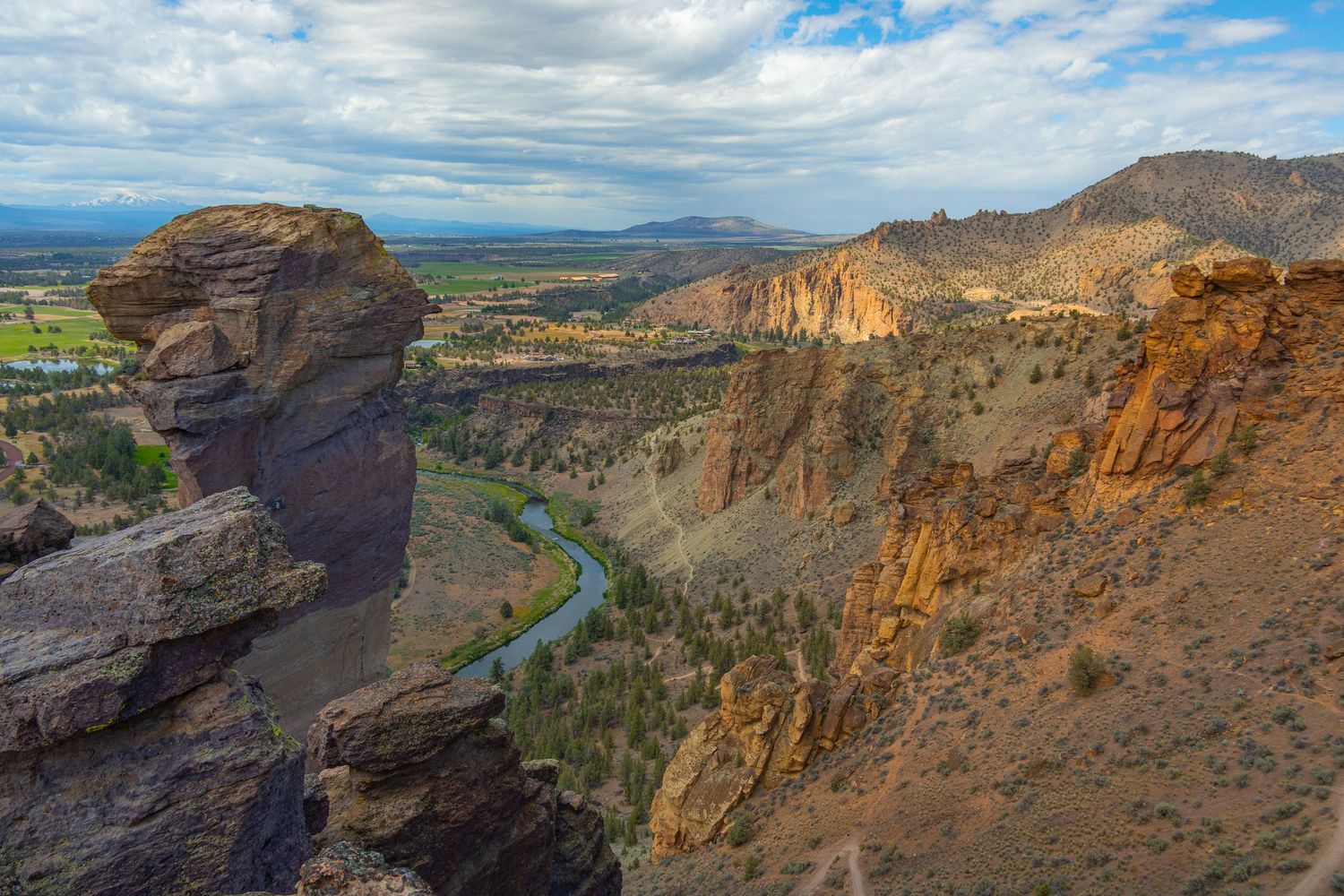
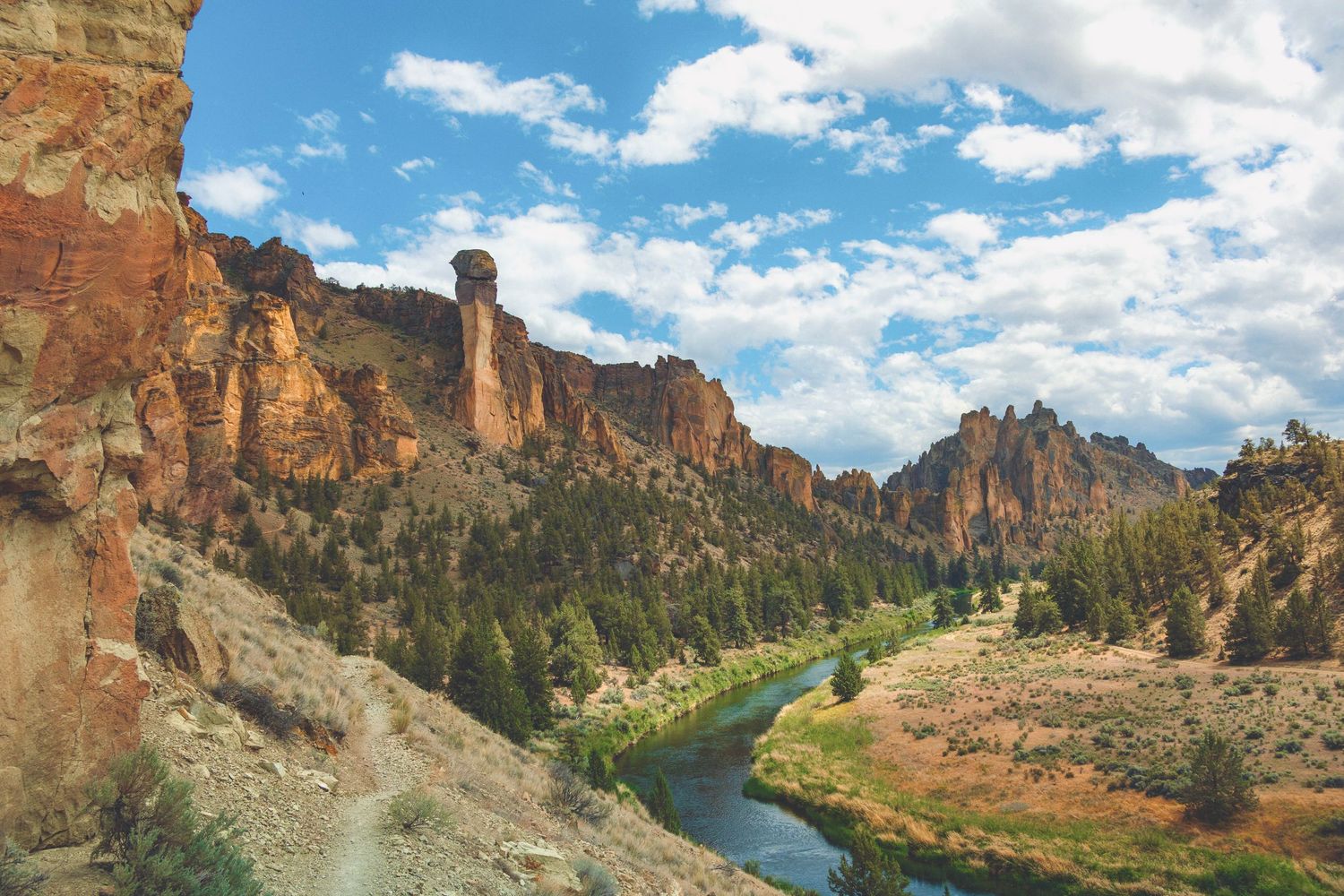
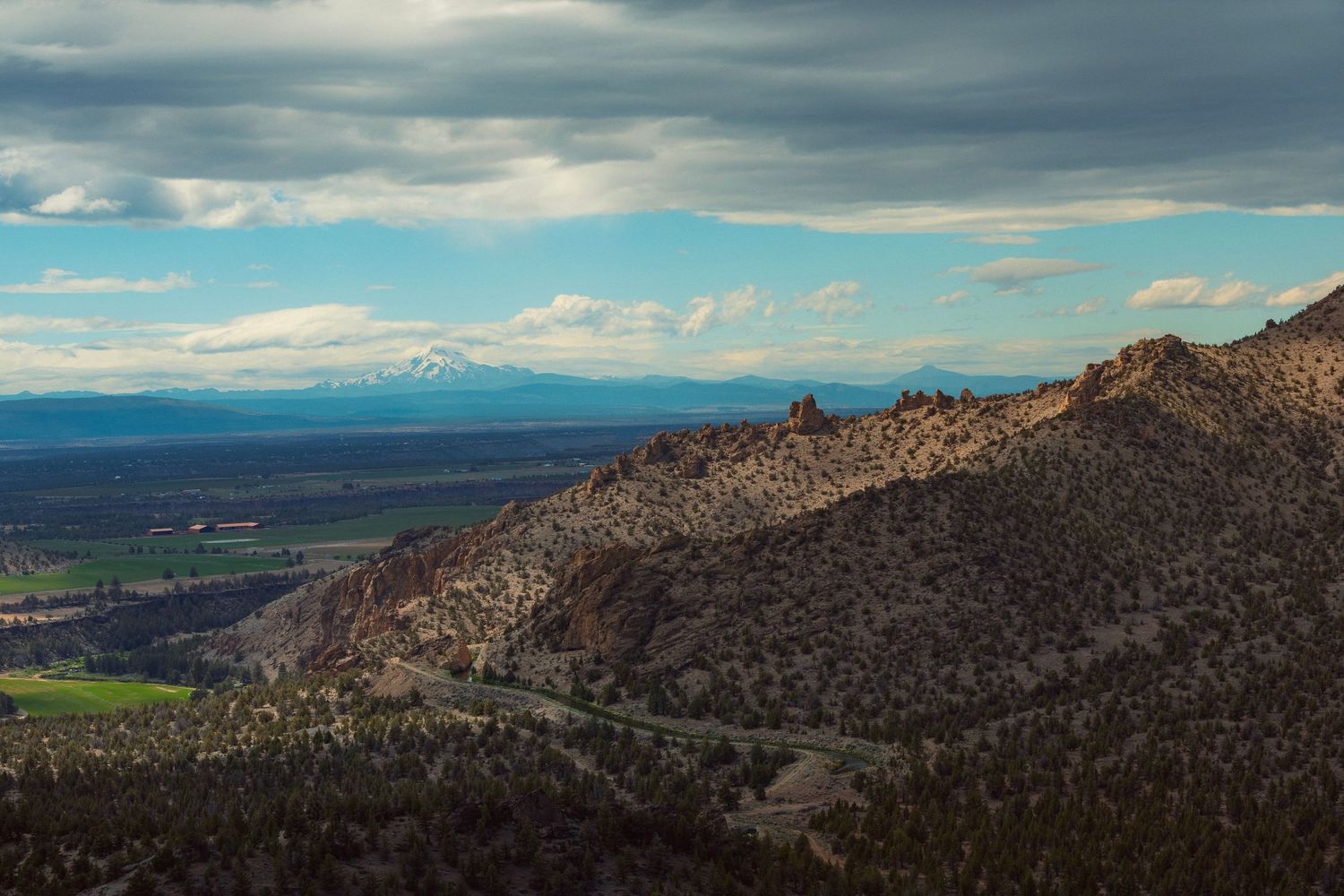
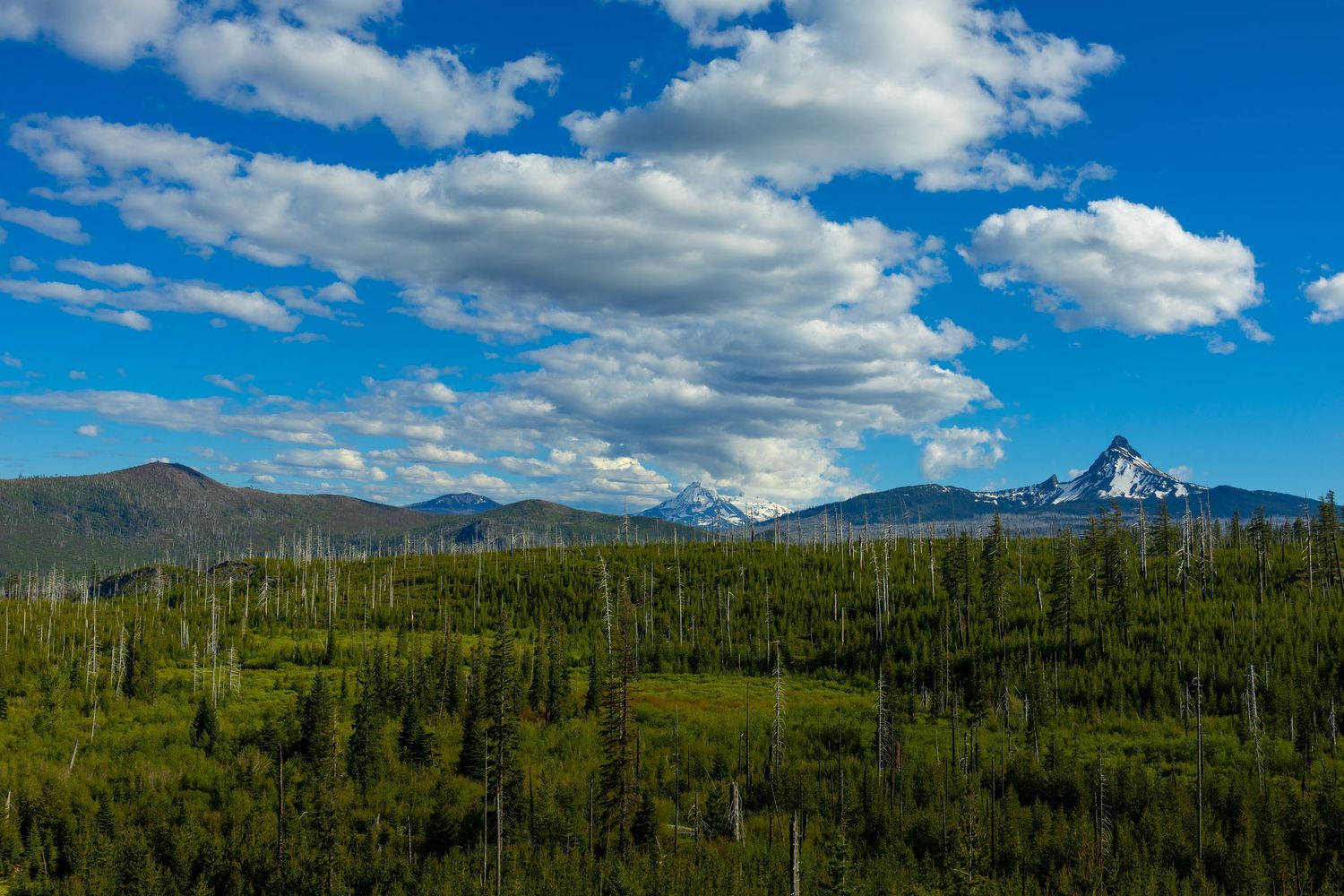
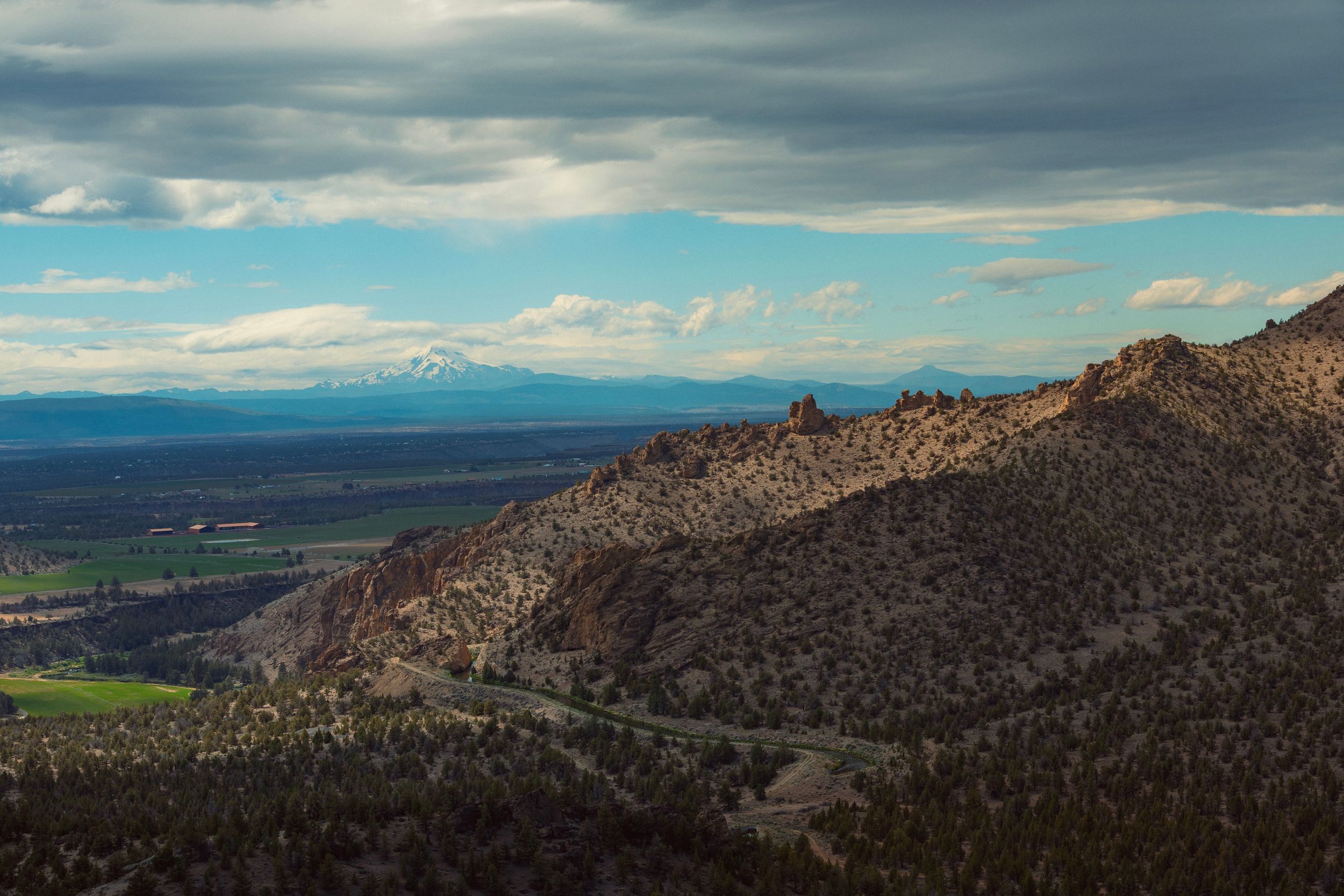
Even on the opening approach, the scene defies belief. I'm crossing a river, heading toward a series of switchbacks that slice into the face of an apparently sheer vertical wall. The snow-capped peaks of the Cascade Range line the horizon. Crooked River skirts the upper lip of a canyon in a way that seems to argue with gravity.
I take a photo and have an immediate, deflating realization: people are going to think this is AI-generated. It’s too layered, too perfect, and too weird. Then, a mile or so into the hike, I turn a corner and the Monkey Face spire comes into view. Out loud, I say:
Go home, nature. You're drunk.
The Origin Story
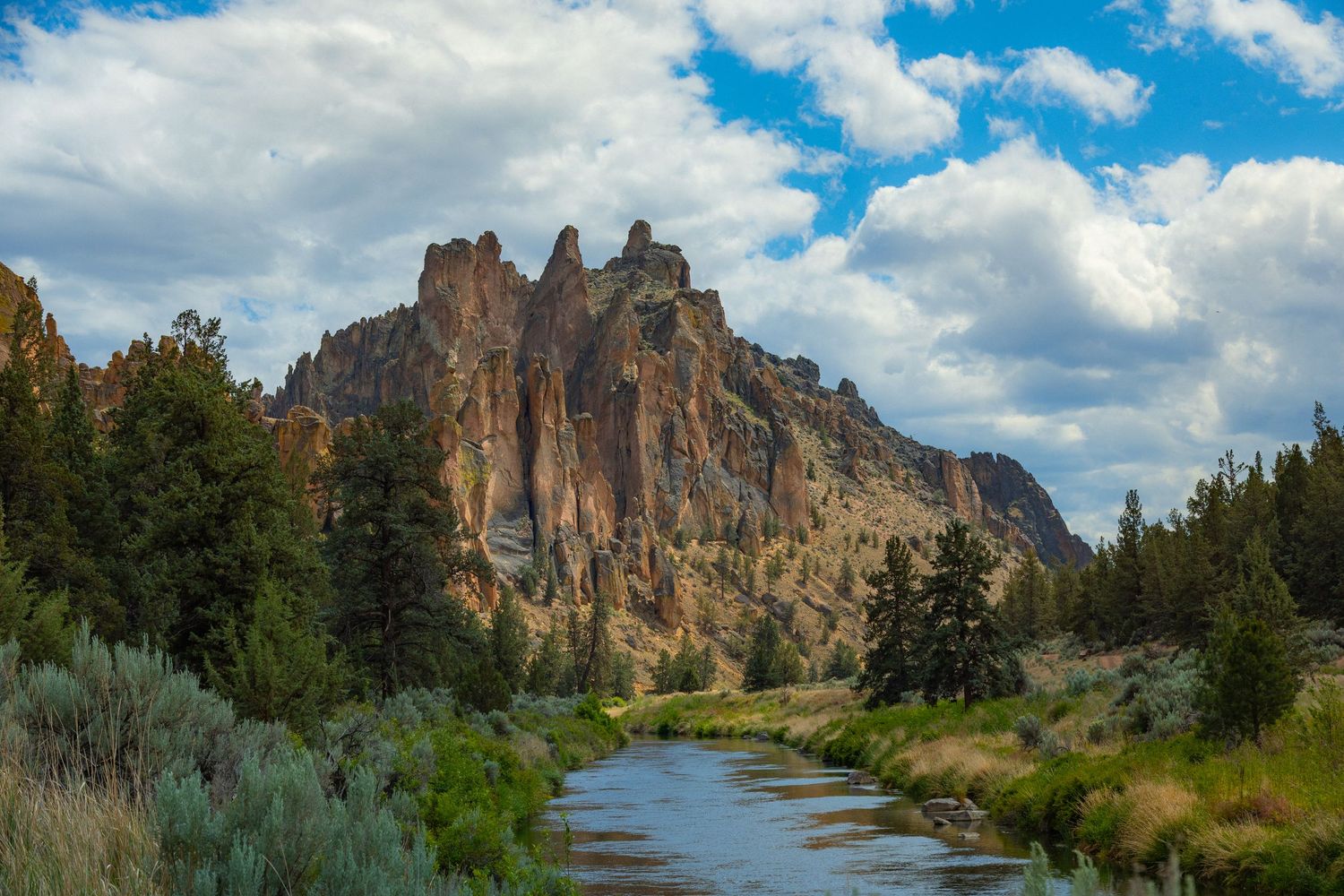
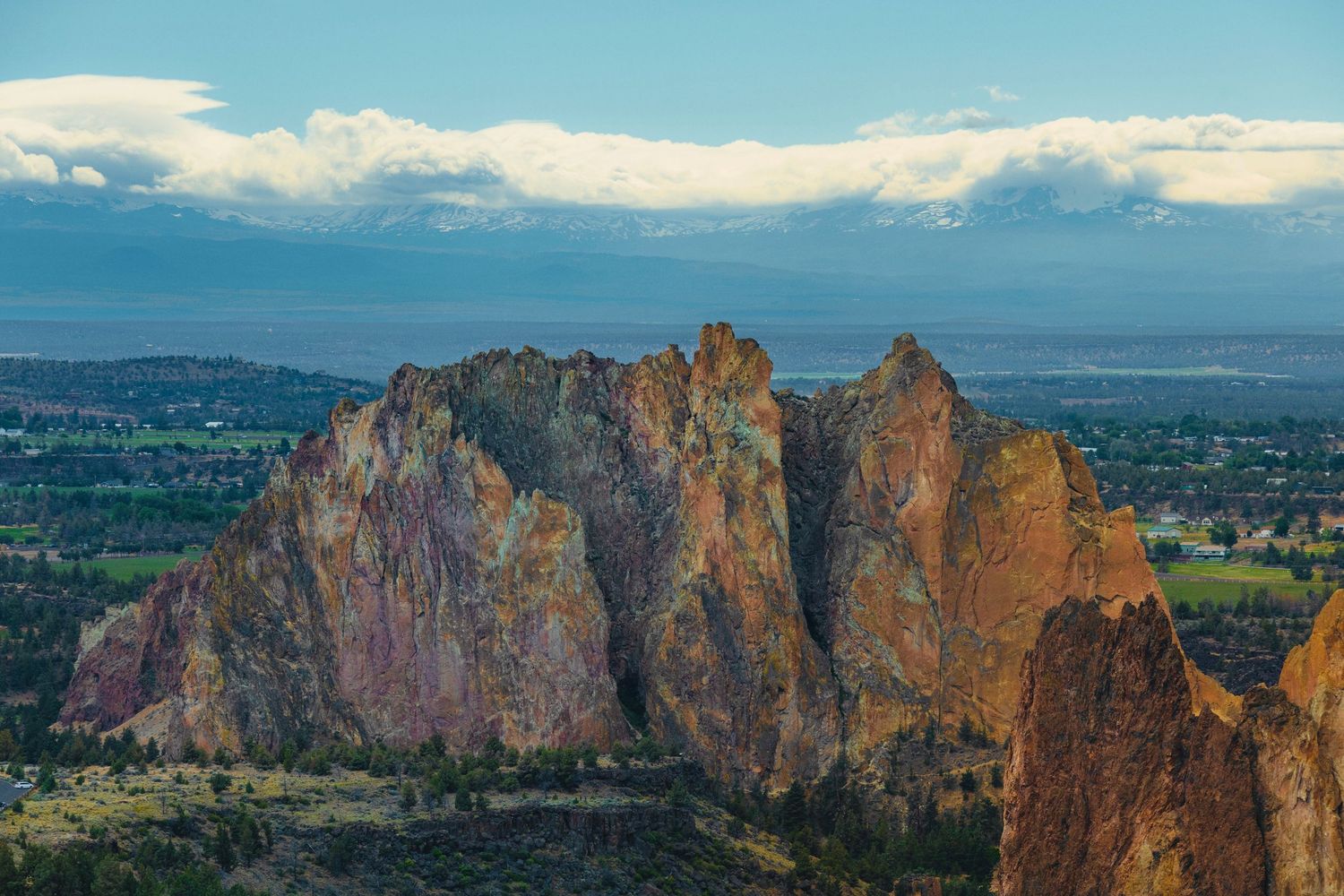
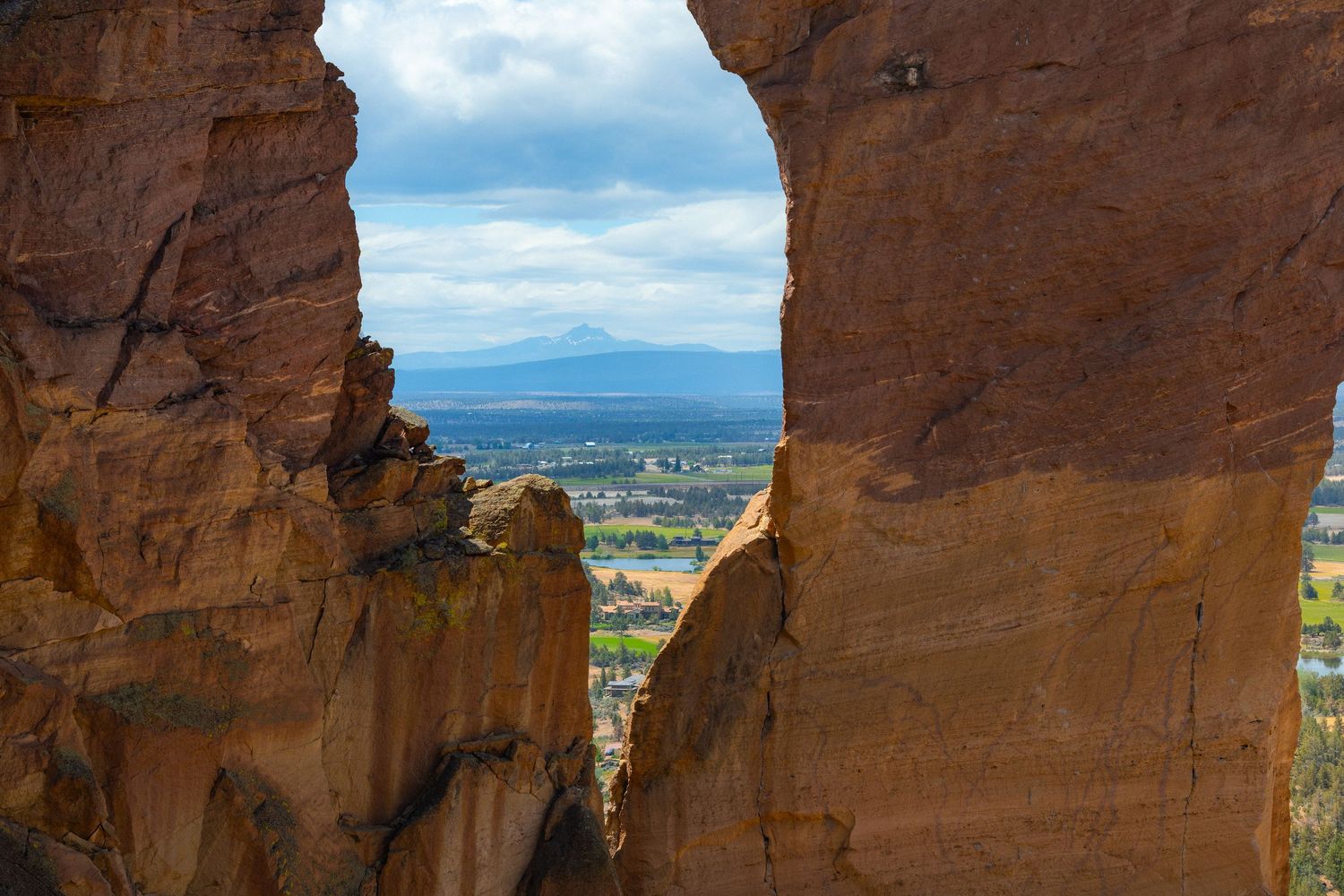
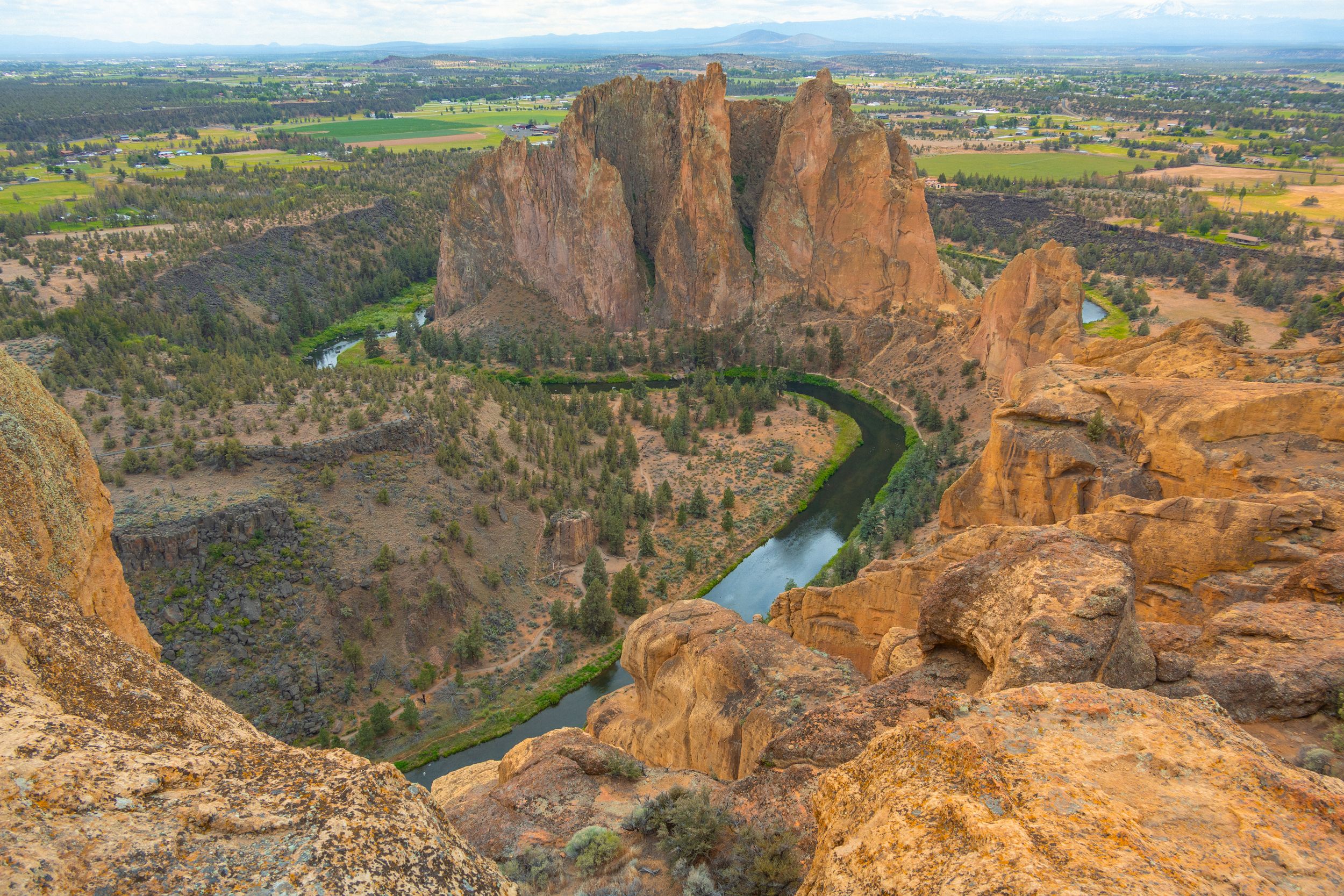
Smith Rock looks like it belongs in Utah. The warm reds and tans, the dramatic spires, the sense that the landscape is showing off — it's all there. But it didn't form the way Utah's canyon country did. It has a stranger origin story.
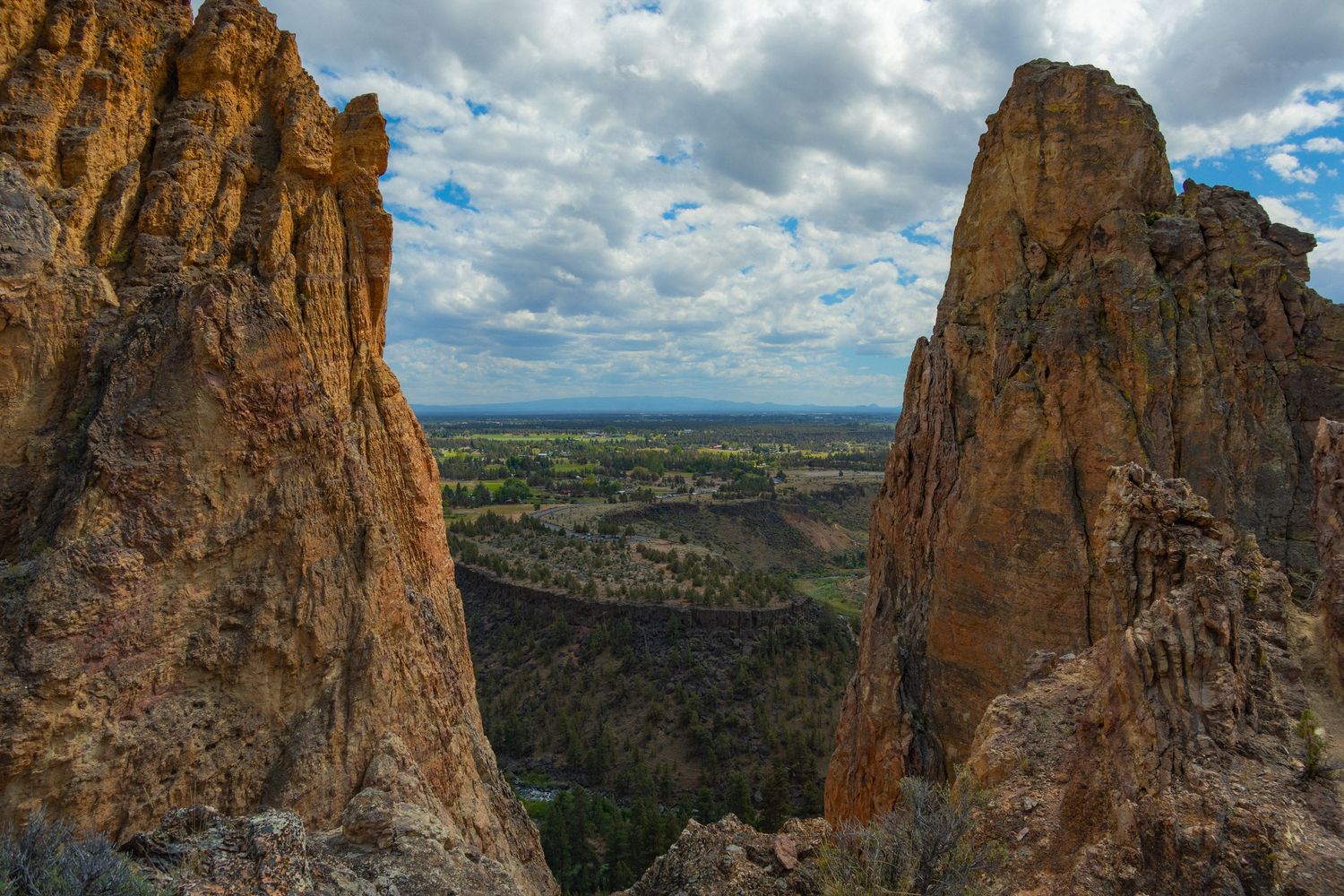
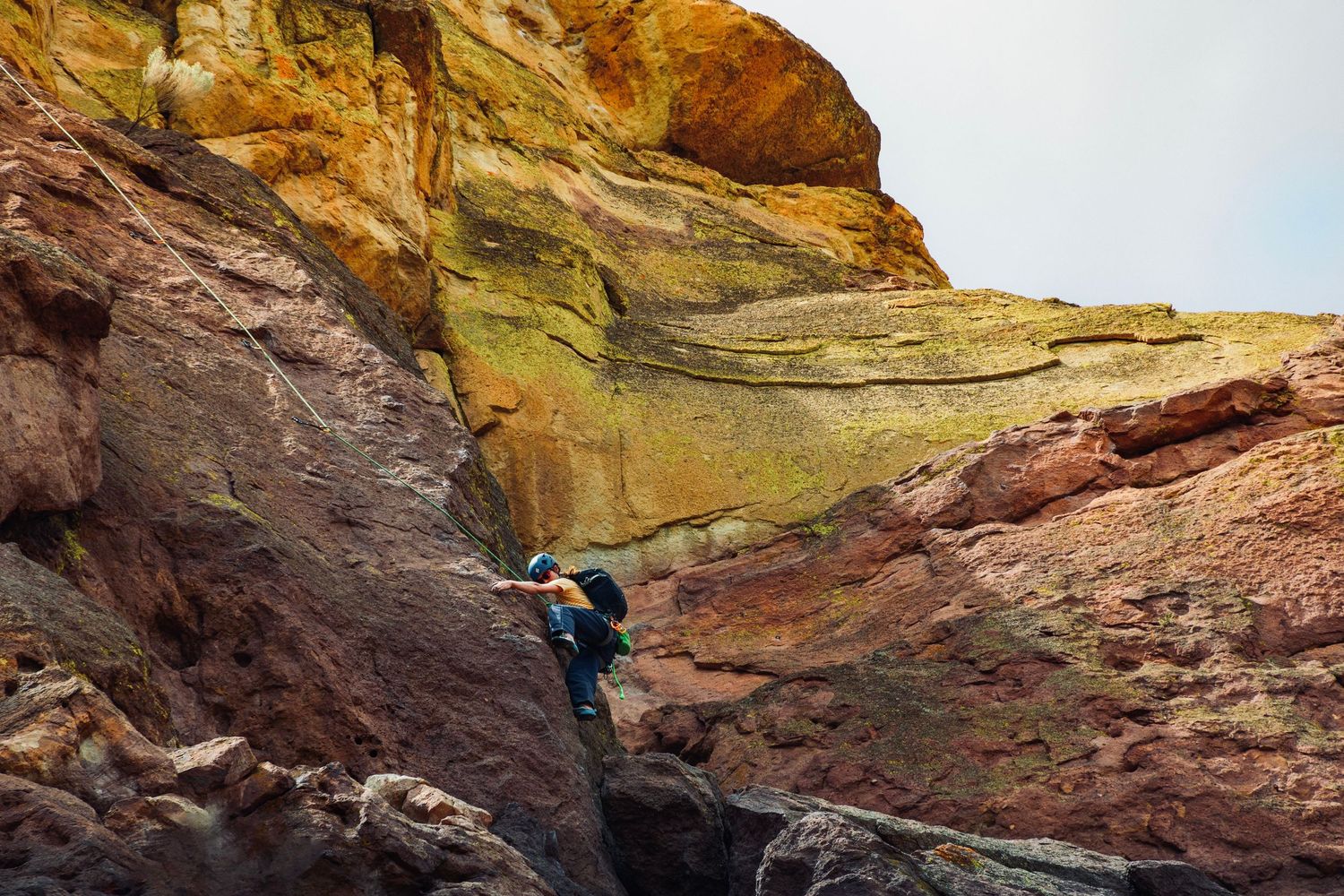
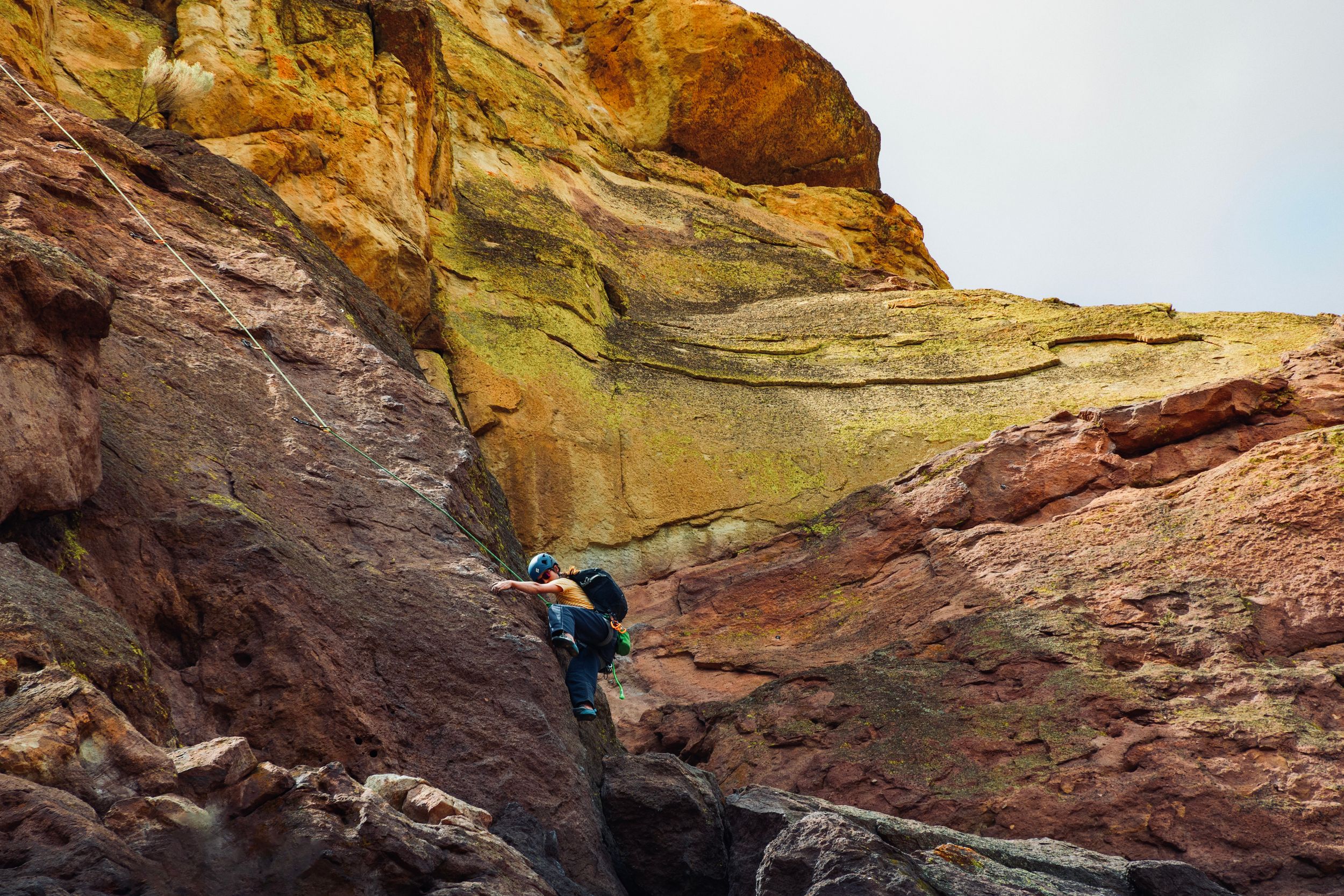
Thirty million years ago, a supervolcano erupted with enough force to blast a column of ash and gas miles into the atmosphere. That cloud eventually collapsed, sending a scalding avalanche of ash and rock racing across the landscape at hurricane speed. When it finally settled and cooled, it welded itself into solid rock under its own heat and weight. Water and wind spent the next thirty million years carving away everything soft. What's left are the bizarre towers and reliable handholds that climbers flock to from Bend. The color isn't iron, exactly — it's the natural palette of compressed rhyolitic ash, with just enough mineral variation to give the rock its warm layered tones.
The Trail
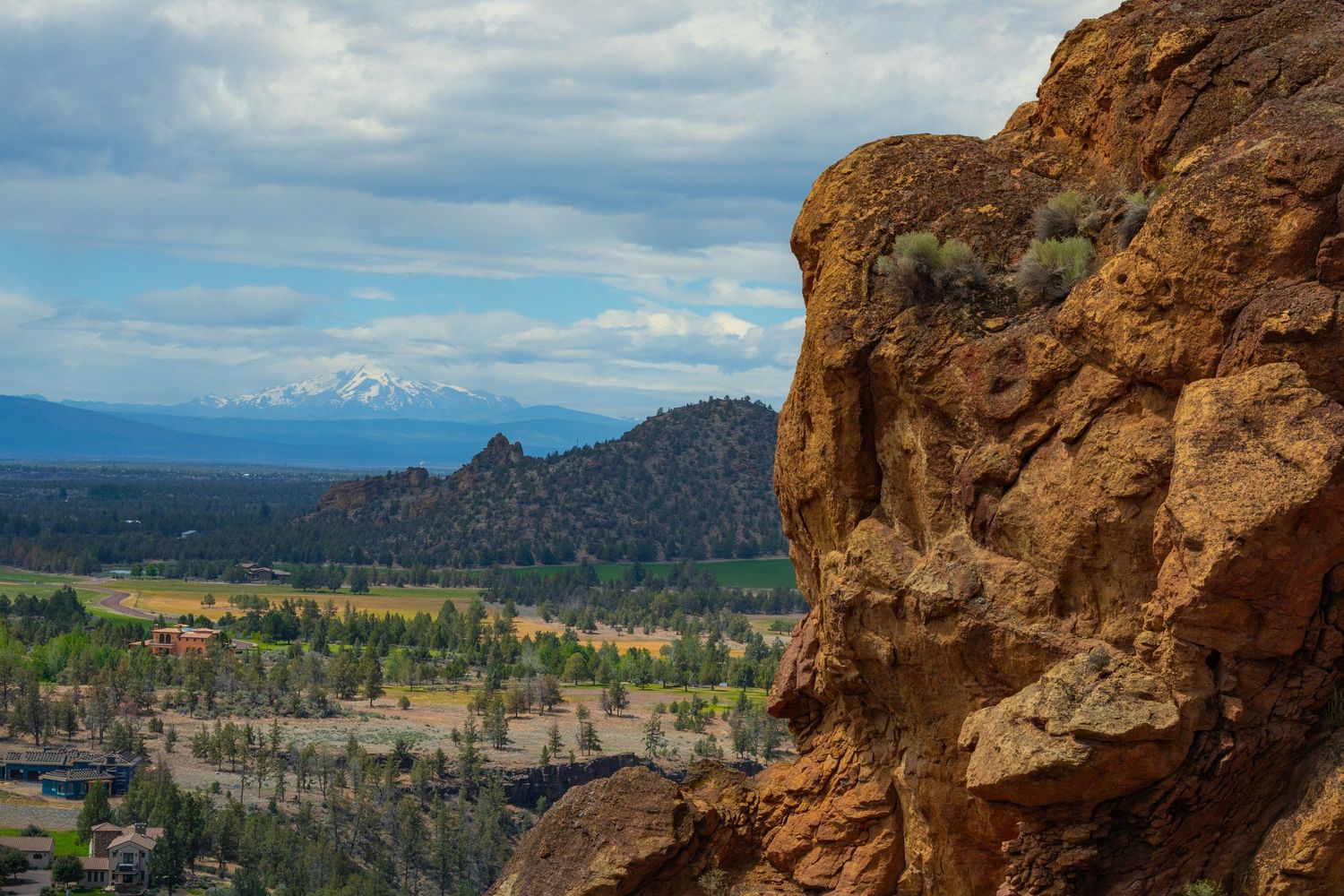
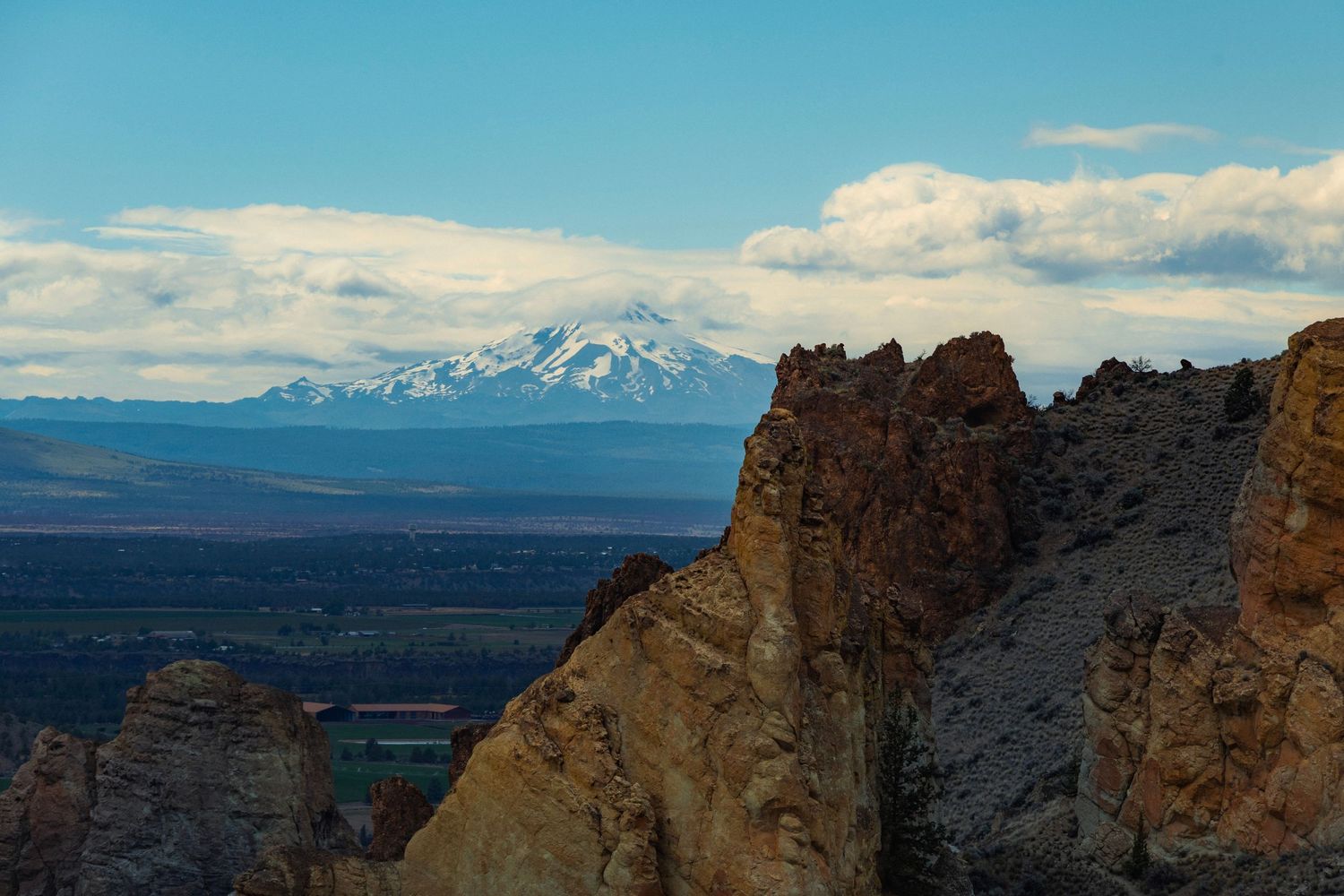
The trail drops from the parking area down to the Crooked River, crosses a footbridge, and immediately begins climbing. The switchbacks I'd seen from the approach — I was on them now, cutting up the face of the ridge with the river shrinking below and the canyon walls rising around me. By the time I crested the ridge, the snow-capped Cascade Range had opened up to the west, and the full scale of the park revealed itself all at once.
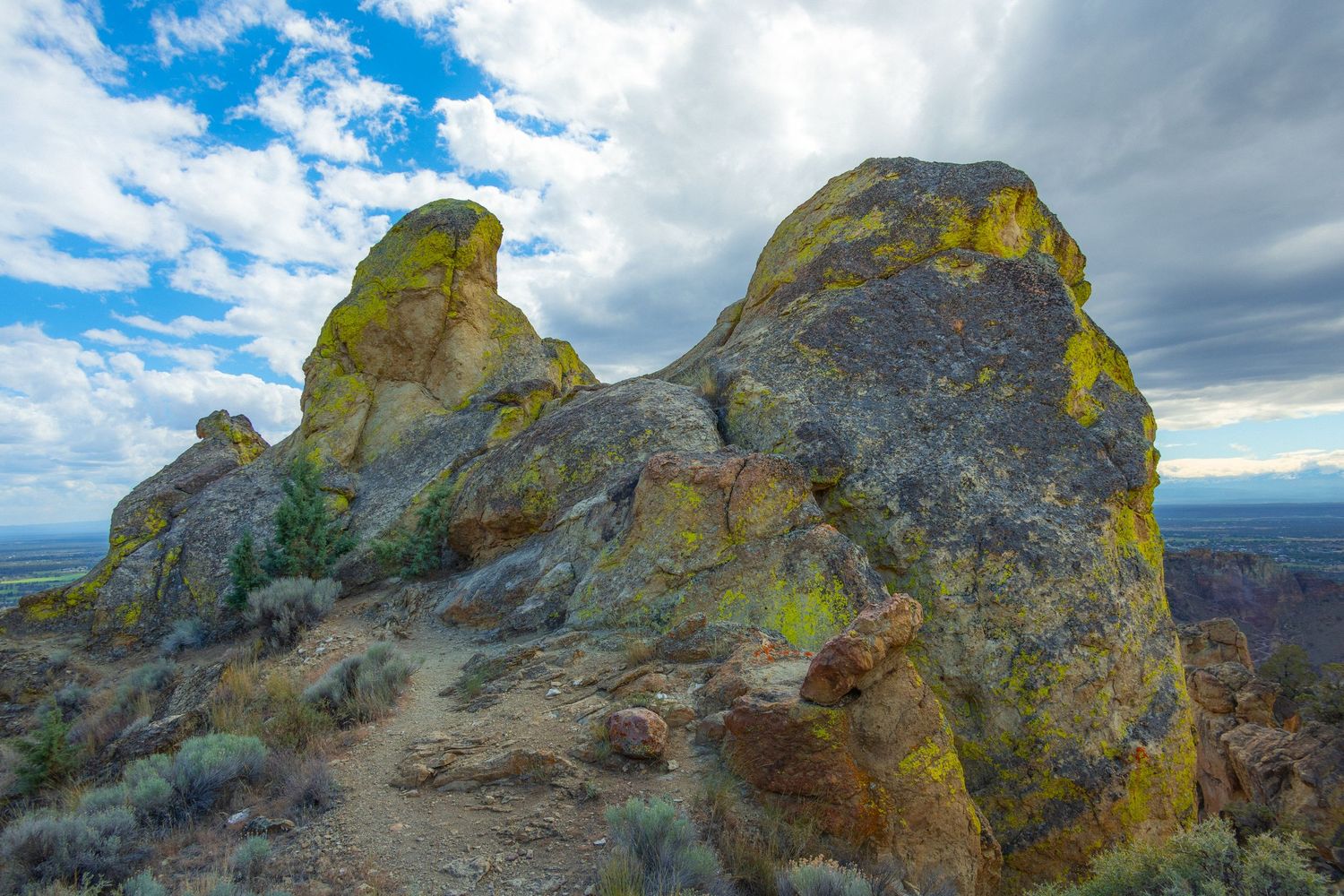
The loop winds along the summit past gnarly formations and overlooks. Side trails branch off in every direction. I followed many of those branches, and was rewarded in every case. What's listed as a six-mile loop became eight miles before I'd noticed. Then the trail did something ridiculous. It led me all the way back down all the elevation I just gained, on the opposite side the huge ash cloud sculpture.
The Monkey Face spire is in plain view the whole way down. It’s hard to take your eyes off it. It looks like something the Na'vi would fly to on their Mountain Banshees in an Avatar movie. Monkey Face is top-heavy — the whole spire is an overhang. It looks like a strong wind could knock it over any minute. But humans climb it.
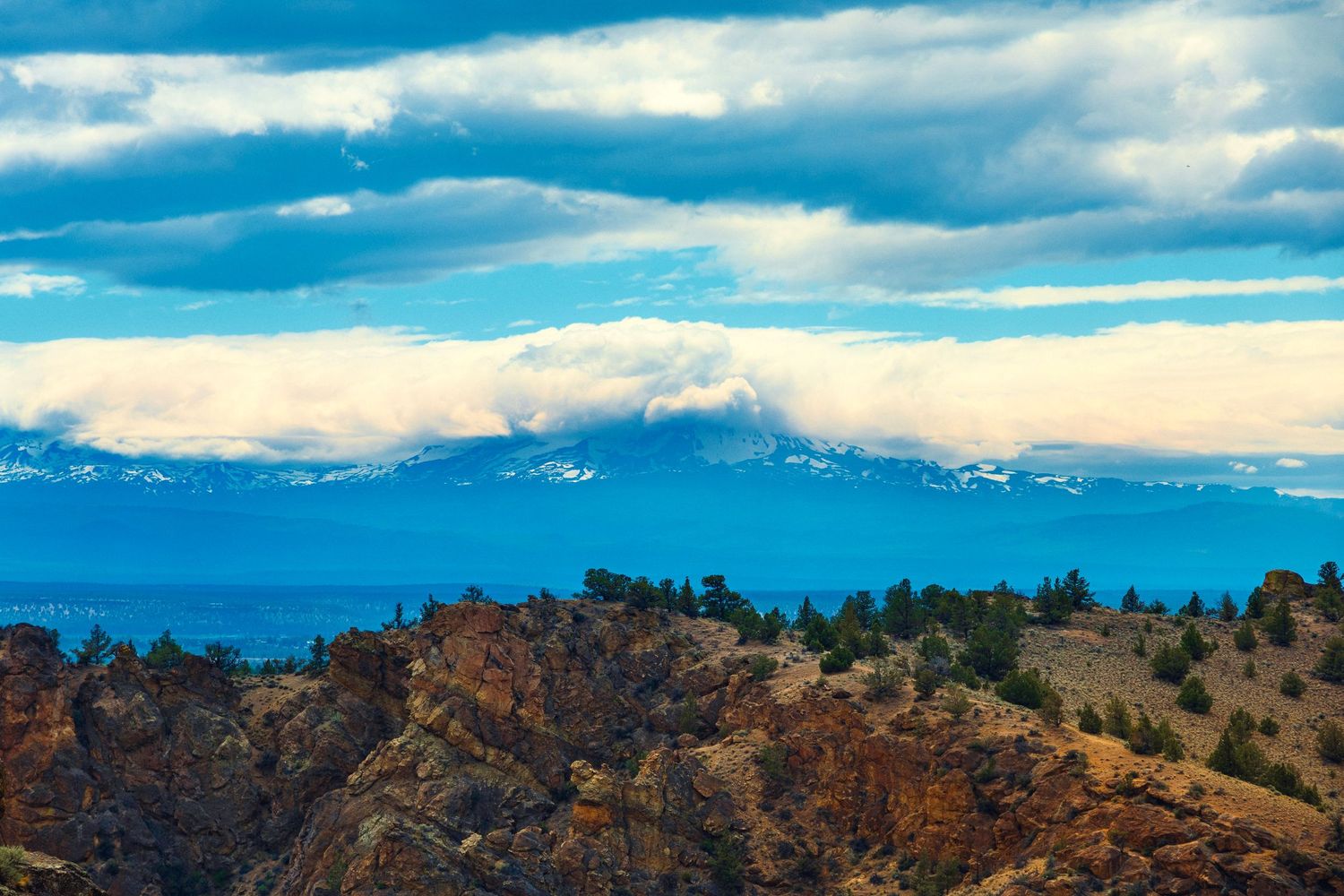
I was back on the valley floor. I checked AllTrails to see if I’d be climbing back up at all. Yes. Yes, I would. The next few miles ascend beyond the elevation of that first ridge, with a completely different set of views. Notably, thick cloud formations were busy trying to pass through the Cascade Range in the distance. That show alone was worth the price of admission ($12 for a day pass to Smith Rock State Park, btw).
As I reached the final leg of the loop trail, the opening switchbacks came back into view from across the canyon. I could trace the exact route I'd taken up the face, every turn laid out against the rock. It was like reading back a story I'd written without realizing it.
I crossed back over the bridge, and walked back up the hill to the car. That last uphill burned. But a part of me wanted to turn around and do the whole loop again in reverse. I’ll be back.


The Bender
The next day, I hiked over huge chunks of black obsidian glass at Newberry Volcanic National Monument and walked up a 600,000-year-old cinder cone for sunset. In the week ahead, I would come to realize that Central Oregon is full of absolutely bizarre volcanic geology.
I’d had plans to take it easy in Bend, OR (read a book, binge a TV show, whatever normal people do). This is not a place to rest. There’s too much out there: hikes, climbs, music, rafting, food trucks, coffee shops…and breweries. There seem to be more breweries than humans here. And I’ve figured out what they’re doing with all that beer.
The earth here is drunk. It’s acting out. And I’m here for the show.
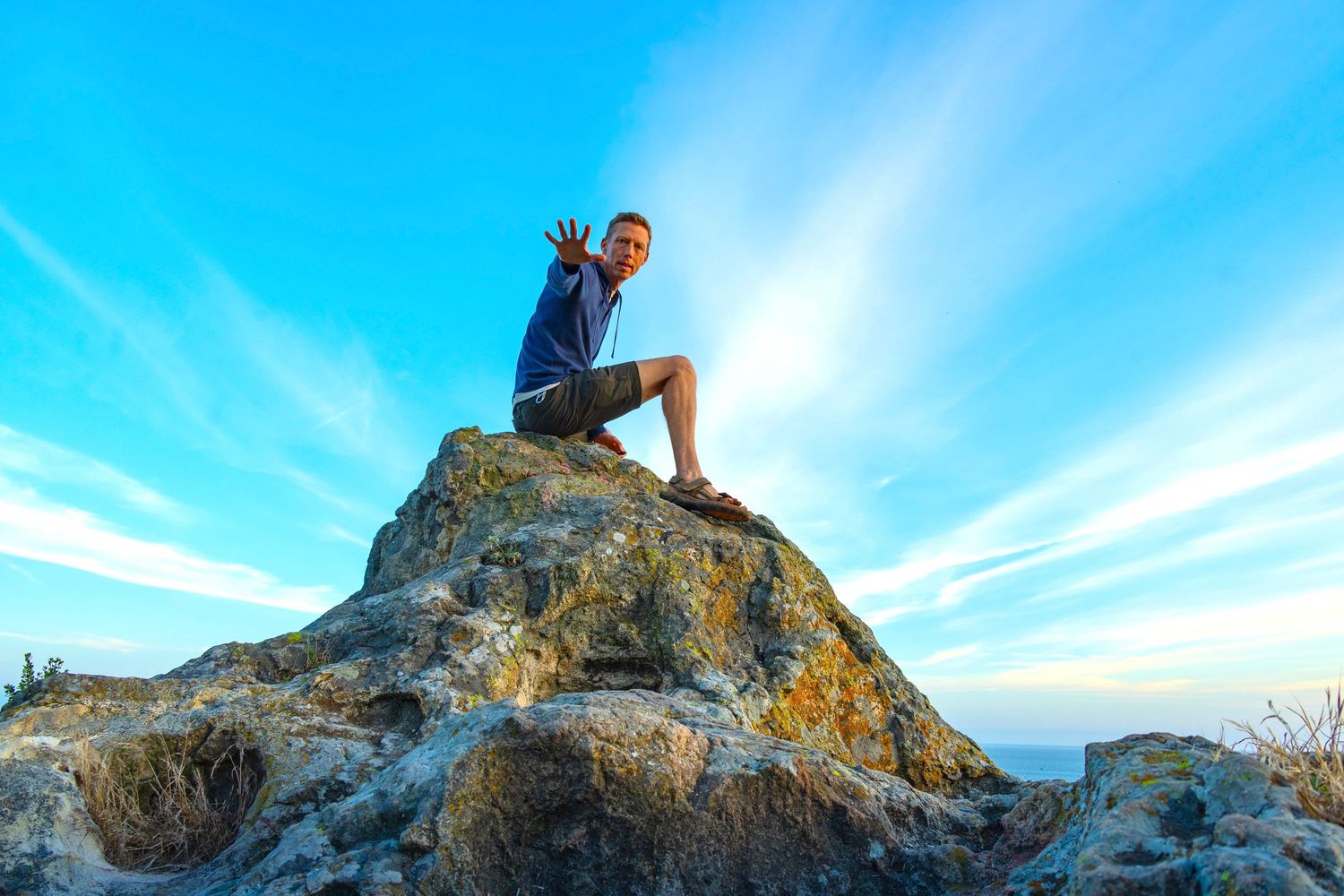
This article and all photos herein: © Brian Gundersdorf, 2026. All rights reserved. For licensing or partnership inquiries, contact Brian Gundersdorf.
About The Author:
Brian Gundersdorf is a creative director and brand journalist documenting America's landscapes, trails, and coastlines on a solo cross-country journey by car, foot, camera, and keyboard. His work is narrative-driven, reported, and photographed.